In a cement plant, conveyor systems continuously transport materials such as limestone, coal, clinker, gypsum, and additives between different stages of production. To ensure reliable and efficient conveyor operation, the conveyor pulley is one of the key components that must be correctly selected from the design stage.
So, what types of conveyor pulleys for cement plants are available? Which pulley should be used at each position? And when should Martin conveyor pulley solutions be considered?
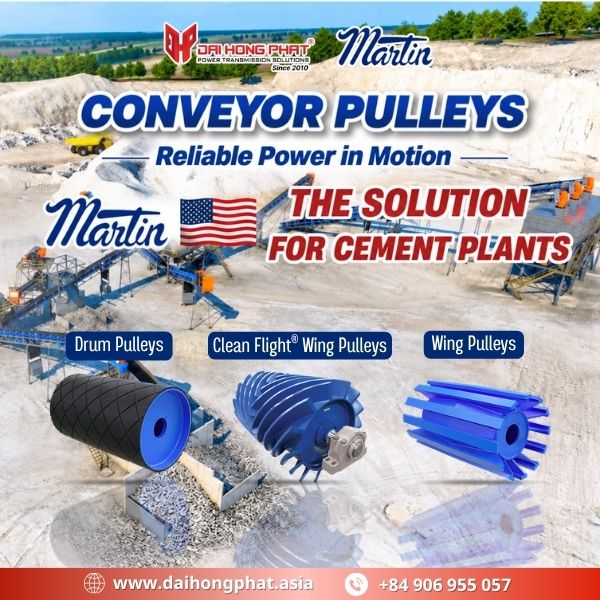
1. What Is the Role of a Conveyor Pulley in a Cement Plant?
A conveyor pulley, also commonly referred to as a belt drum or conveyor drum, is a cylindrical component that comes into contact with the conveyor belt and is installed at different positions throughout the conveyor system.
Depending on its position and function, a conveyor pulley can drive the belt, change its direction, increase the belt wrap angle, or help maintain proper belt tension.
Key functions of a conveyor pulley in a cement plant include:
+ Transmitting torque from the electric motor and gearbox to the conveyor system.
+ Using friction between the pulley surface and conveyor belt to transmit driving force and move heavy loads.
+ Maintaining appropriate belt tension under demanding operating conditions.
+ Guiding the conveyor belt along the designed path, including changes in direction and elevation.
+ Supporting reliable and continuous material handling throughout the production process.
For cement plants, correct pulley selection is particularly important because conveyors often operate continuously under heavy loads and in dusty, abrasive environments.
2. Key Conveyor Pulley Positions in a Cement Plant
A conveyor system can use multiple pulleys, with each position serving a specific function. Therefore, the first step in selecting a pulley is to clearly identify where it will be installed.
Drive Pulley: The Drive Pulley is the primary powered pulley. It receives torque from the drive system and transfers the driving force to the conveyor belt. It is typically installed at the discharge end of the conveyor and plays a critical role in belt traction and power transmission.
Tail Pulley: The Tail Pulley is generally installed at the loading or return end of the conveyor. It is a non-drive pulley that helps guide the belt and maintain proper belt tracking.
Snub Pulley: A Snub Pulley is installed near the drive pulley or at other strategic locations to increase the belt wrap angle around the drive pulley. Increasing the wrap angle can improve traction between the belt and drive pulley and help reduce belt slippage.
Bend and Take-Up Pulley: Depending on the conveyor configuration, pulleys may also be used at bend points or in take-up systems. These pulleys help change the belt direction or maintain the required belt tension throughout the conveyor system.
3. Conveyor Pulley Construction and Operating Principle
3.1 Main Components of a Conveyor Pulley
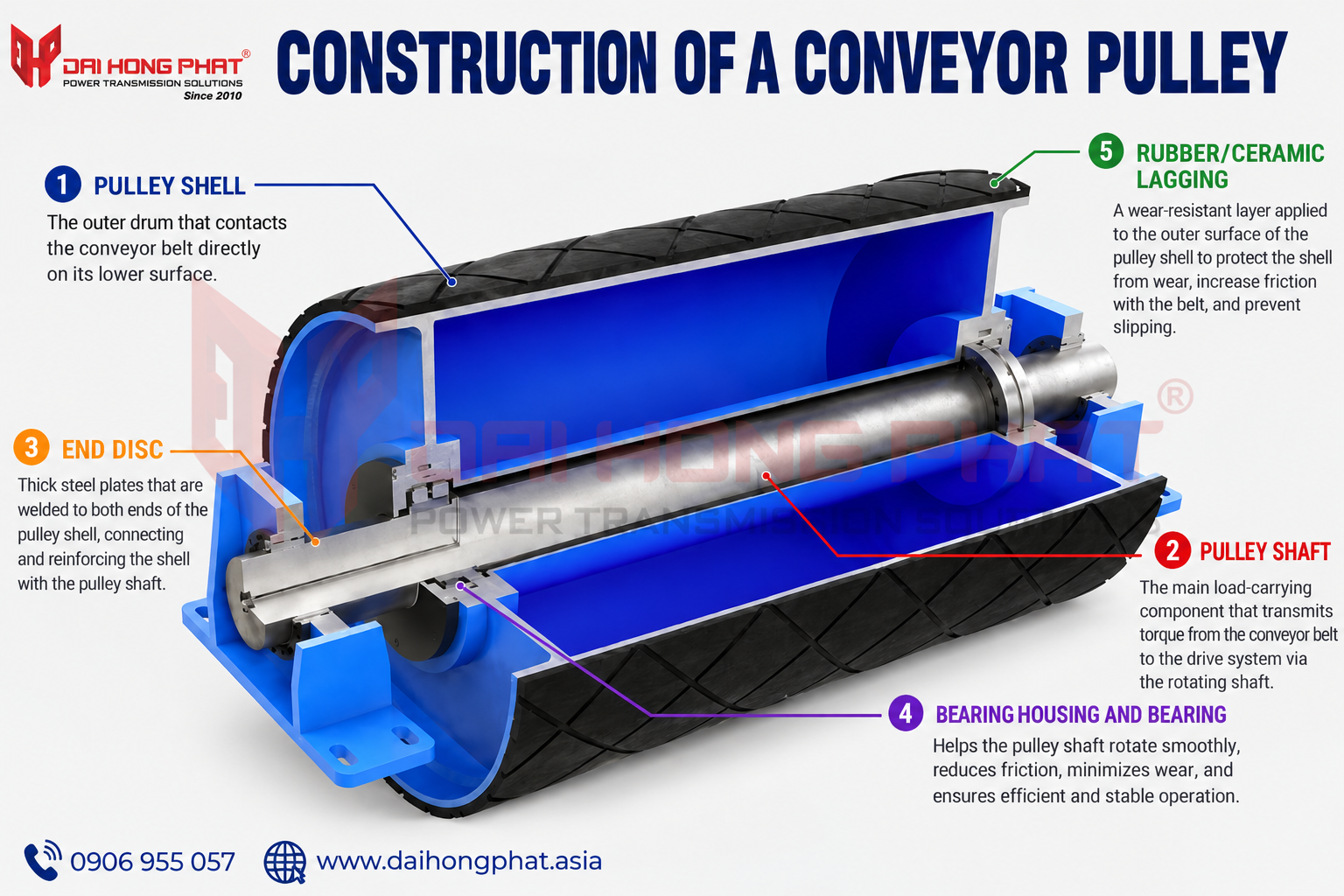
A typical conveyor pulley consists of several key components:
+ Pulley Shell: The cylindrical outer body that comes into contact with the conveyor belt.
+ Pulley Shaft: The shaft supports bending loads caused by belt tension and transmits torque in drive applications.
+ End Discs: Heavy steel discs welded to the pulley shell and connected to the shaft, providing structural support between the shell and shaft.
+ Bearings and Bearing Housings: These support the shaft and allow smooth rotation while minimizing friction and power losses.
+ Rubber or Ceramic Lagging: A protective layer applied to the pulley surface to improve traction, protect the shell, and reduce belt slippage where required.
The exact construction of a conveyor pulley depends on its application, loading conditions, pulley position, belt specifications, and operating environment.
3.2 How Does a Conveyor Pulley Work?
A conveyor pulley operates by transmitting torque and generating belt traction through friction between the pulley surface and conveyor belt. In a typical conveyor drive system, the power transmission sequence can be described as: Electric Motor → Gearbox → Drive Shaft → Drive Pulley → Conveyor Belt
The effectiveness of this power transmission depends on several factors, including belt tension, belt wrap angle, and the coefficient of friction between the pulley surface and belt.
A larger wrap angle generally provides greater contact between the belt and pulley, which can improve traction and reduce the risk of belt slippage.
In some conveyor configurations, a Snub Pulley is used to increase the belt wrap angle around the Drive Pulley, helping improve traction and power transmission.
The Importance of Friction
If the friction between the belt and pulley is insufficient, belt slippage may occur. This can reduce conveyor efficiency, generate heat, and accelerate belt or pulley surface wear.
For this reason, the pulley design, lagging material, belt tension, and operating conditions should be considered together rather than selecting the pulley based on diameter alone.
4. Which Martin Conveyor Pulleys Are Suitable for Cement Plants?
Cement plants contain conveyor systems with different positions, loads, belt speeds, and operating conditions. Therefore, a single pulley design cannot be used for every application.
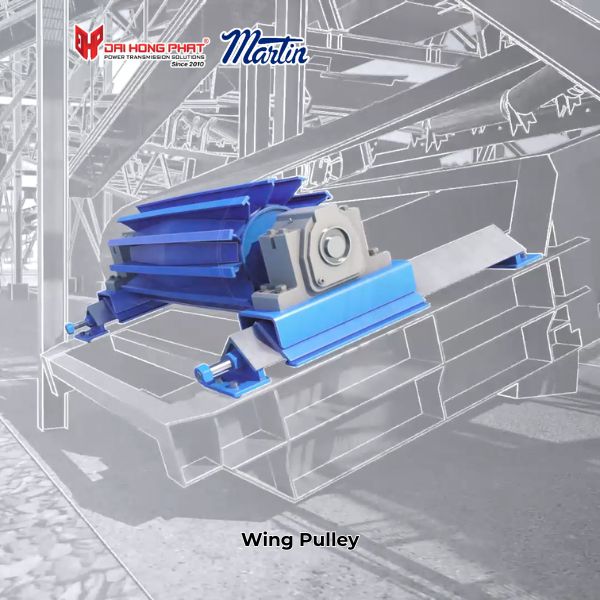
Martin Engineering offers a range of industrial conveyor pulleys, including drum pulleys, wing pulleys, and specialized designs for demanding applications.
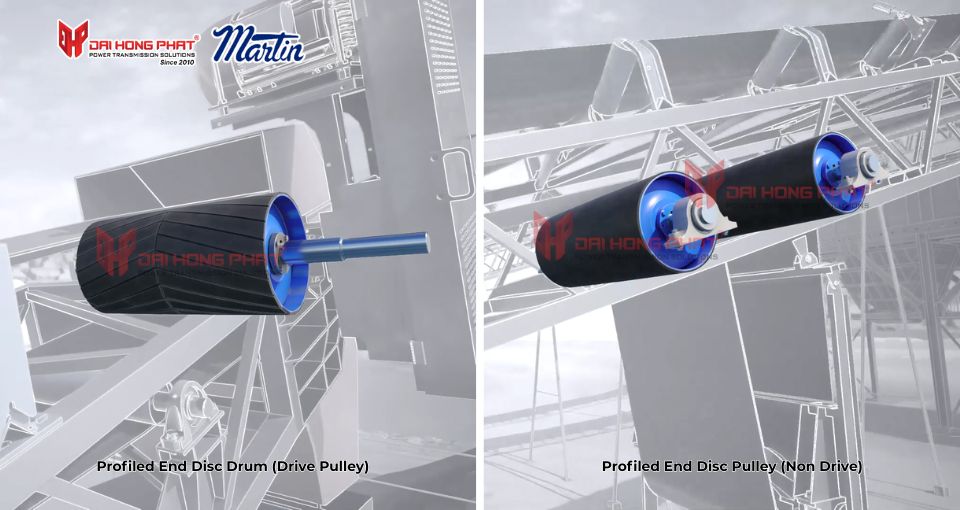
Profiled End Disc Pulleys
+ The Profiled End Disc Pulley from Martin features a profiled end-disc design developed as an alternative to traditional Standard, Mine Duty, and Quarry Duty drum pulley designs.
+ The product range includes different configurations for drive and non-drive applications.
Profiled End Disc Drum – Drive Pulley
+ The Profiled End Disc Drum – Drive Pulley is designed for drive positions where the pulley transmits torque to the conveyor belt.
+ It is suitable for applications where reliable power transmission and structural performance are important considerations.
Profiled End Disc Pulley – Non-Drive
+ The Profiled End Disc Pulley – Non-Drive is designed for non-powered positions within the conveyor system, such as tail or other return-side applications depending on the conveyor configuration.
Clean Flight® Wing Pulleys
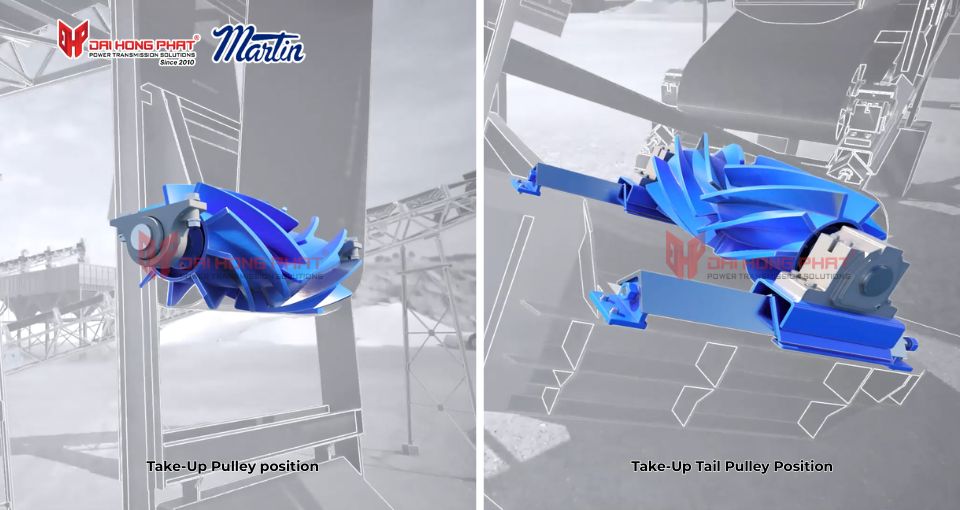
+ The Clean Flight® Wing Pulley is a specialized wing pulley design from Martin that combines principles associated with conveyor pulley and screw conveyor technology.
+ One notable feature is the spiral configuration of the wings around the pulley body.
Depending on the conveyor design, Clean Flight® Wing Pulleys can be used in applications such as:
– Tail Pulley positions
– Take-Up Pulley positions
– Areas where material buildup between the belt and pulley needs to be considered
+ The wing configuration can help manage material that may otherwise become trapped between the conveyor belt and pulley surface.
Heavy-Duty Wing Pulleys
+ Unlike a conventional drum pulley with a continuous cylindrical surface, a Heavy-Duty Wing Pulley uses wings and contact bars to create the belt-contacting surface.
+ This construction is designed for demanding industrial applications and can be useful in areas where material buildup between the belt and pulley is a concern.
For cement plants handling abrasive bulk materials, pulley selection should take into account not only belt load but also material characteristics, dust, carryback, and operating conditions.
5. How to Choose the Right Martin Conveyor Pulley for Each Position
Selecting a conveyor pulley should not start with the question, “What pulley diameter do we need?” The selection process should begin with the pulley position and actual operating conditions.
1. Identify the Pulley Position
First, determine whether the pulley will be used as a:Drive Pulley, Tail Pulley, Snub Pulley, Bend Pulley, Take-Up Pulley. Each position has a different function and loading condition.
2. Identify the Material Being Conveyed
The conveyed material can significantly affect pulley selection. Cement plants may handle: Limestone, Clinker, Coal, Gypsum, Additives and Other bulk materials. Dust, abrasion, carryback, and material buildup should be considered when selecting the pulley design.
3. Evaluate Operating Conditions
The pulley should be selected based on actual operating conditions, including:
+ Continuous operation
+ Heavy-duty loading
+ High belt tension
+ Abrasive materials
+ Material buildup
+ Dusty environments
+ High belt speed
A heavy-duty conveyor operating continuously in a cement plant may require a different pulley design from a conventional bulk-material conveyor.
4. Collect Complete Technical Specifications
Before selecting a specific conveyor pulley, the following information should be available:
+ Pulley diameter
+ Face width
+ Belt width
+ Shaft diameter
+ Bearing center dimensions
+ Bore or bushing requirements
+ Shaft projection
+ Motor power
+ Belt speed
+ Belt tension
+ Belt wrap angle
+ Take-up configuration
Having complete technical data helps prevent incorrect pulley selection and ensures that the selected design matches the actual conveyor application.
5. Select the Appropriate Pulley Construction
Once the application data has been established, the appropriate pulley configuration can be evaluated, such as:
+ Drive or Non-Drive
+ Drum or Wing
+ Standard Duty
+ Quarry Duty
+ Mine Duty
+ Engineered Pulley
The final selection should be based on the complete operating conditions rather than a single specification.
6. Why Consider Martin Conveyor Pulleys for Cement Plants?
One notable feature of the Martin conveyor pulley portfolio is the availability of different designs for different conveyor positions and operating conditions.
For example:
+ Profiled End Disc Drive and Non-Drive Pulleys can be considered for powered and non-powered conveyor positions.
+ Wing and Clean Flight® Wing Pulleys can be considered for applications where material buildup is a concern.
+ Quarry Duty and Mine Duty designs are available for demanding heavy-duty applications.
+ Engineered Pulleys may be considered for specialized conveyor requirements.
For cement plants, choosing the correct conveyor pulley requires more than selecting a standard product. The pulley should be matched to the conveyor position, belt specifications, load, material characteristics, and operating environment.
In Vietnam, Dai Hong Phat supplies genuine Martin USA conveyor pulleys, with supporting documentation and technical assistance for selecting the appropriate pulley configuration for actual cement plant applications.
Contact Dai Hong Phat for technical consultation and quotation for your conveyor pulley requirements.
Hotline: +84 906 955 057
—————-/—————–/—————–/—————–/—————–
– Hotline: +84906.955.057 | – Email: info@dhp-corp.com.vn
– Website: https://en.daihongphat.asia/ – https://khopnoitruc.com/ – https://ringfeder.com.vn/
- GENUINE SHAFT COUPLINGS: Hidden Costs & TCO Risks When Using Cheap Couplings
- Applications of The Rotex GS Coupling in Industrial
- Ringfeder TNR Coupling is Used for Generators and Diesel Engines According to SAE J 620 Standards
- How To Identify Genuine NKE Bearings You Should Know?
- What is Flexible Shaft Coupling? Types of Flexible Shaft Couplings in 2025