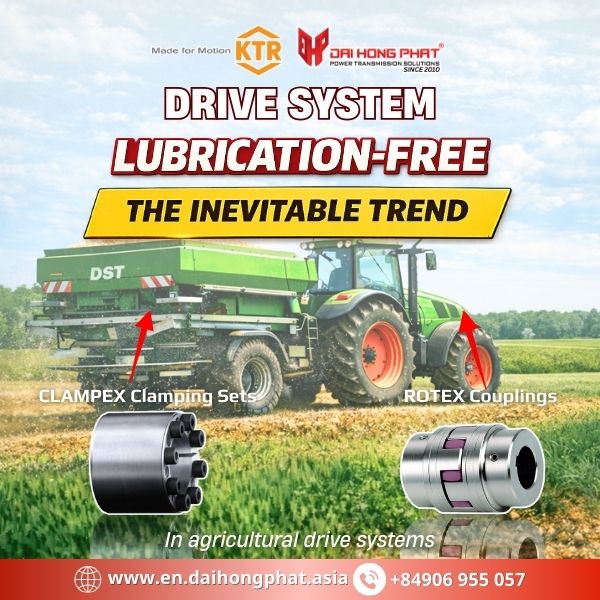
In current agricultural drive systems, failures don’t originate from the gearbox or bearings, but from smaller components: lubrication points, shaft linkages, and couplings. When these components malfunction, vibrations and wear are transmitted throughout the entire system. Therefore, agricultural machinery manufacturers and factories prioritize the use of Unlubricated Drive Systems to reduce operational risks and optimize the total cost of ownership.
1. Why are lubrication points a major risk in machine operation?
Each lubrication point poses a risk due to incorrect lubrication levels.
– Forgetting to lubricate leads to increased friction and wear, resulting in bearing failure.
– Over-lubrication leads to excess grease and dust accumulation, causing reverse wear.
Furthermore, lubrication points in factories are often difficult to access, dependent on maintenance schedules, and easily overlooked.
=> When combined with factors such as loose shaft connections, misalignment of concentricity, and uneven torque transmission, lubricated parts will degrade quickly, eventually leading to machine failure.
Therefore, instead of just improving the lubrication process, the current trend is to reduce or use unlubricated drive systems.
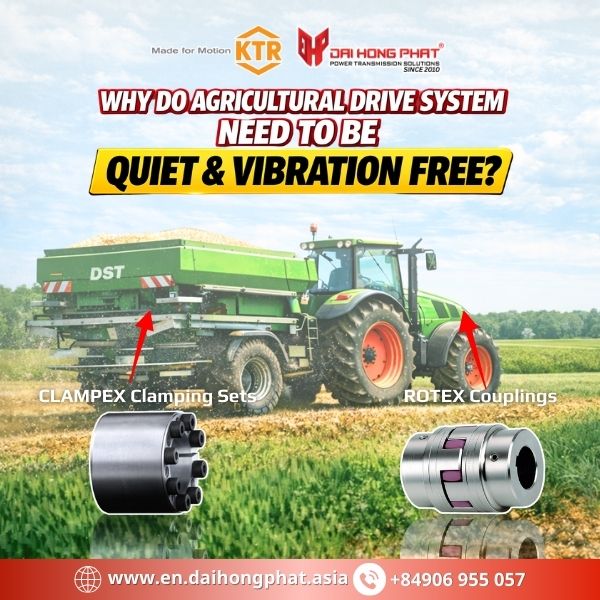
View article: Why do agricultural drive systems need to operate smoothly and quietly?
2. Comparison of Chain-Cardan-Closed Elastic Coupling Drive Systems
| Comparison criteria | Chain drive | Driven by a cardan shaft | Closed elastic coupling + friction joint |
| Structure | Sprocket – chain – sprocket |
Shaft + Cross Joint + Sliding Sleeve
|
Elastic coupling + friction clamp hub |
| Torque transmission capability | Medium – high | High | Medium – high (depending on coupling type) |
| Shaft misalignment compensation | Almost none | Good (Angle Compensation) | Good (compensates for angular misalignment, parallel misalignment, axial misalignment) |
| Mechanical play (backlash) | Yes, increases over time due to chain stretching | Present at cross joints and sliding sleeves | Almost none (friction linkage, no key) |
| Lubrication requirements | Required, frequent | Required at joints and sliding sleeves | Unlubricated Drive Systems |
| Ability to operate in dusty environments | Poor, easily contaminated with dust and wear | Medium, still sensitive to dust | Good, sealed structure, less fouling |
| Vibration and noise levels | Increases over time due to chain stretching | Torsional vibration may occur at high speeds | Low, capable of absorbing shocks |
| Impact on bearings & gearboxes | Uneven load, prone to premature wear | High dynamic load due to torsional vibration | Reduces dynamic load, protects downstream equipment |
| Regular maintenance | High (lubrication, chain tensioning, chain replacement) | High (lubrication, joint inspection) | Very low, almost maintenance-free |
| Risk of sudden machine downtime | Medium – high | Medium | Low |
| Suitable for low-maintenance drive trends | ❌ Not suitable | ⚠ Suitable for limited applications | ✅ Highly suitable |
| Recommended applications | Simple system, low cost, easy to replace | Large shaft distances, angular compensation required | Production lines requiring stability and low maintenance |
From the comparison table above, it can be seen that, to achieve the goals of reducing vibration, noise, and reliance on manual maintenance, modern drive systems are increasingly prioritizing elastic couplings combined with friction shaft linkages, also known as “Unlubricated Drive Systems” instead of continuing to use mechanisms that require frequent lubrication.
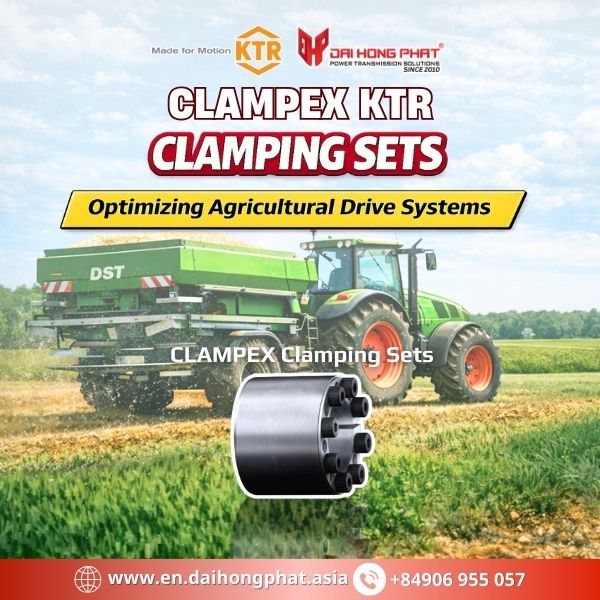
View article: CLAMPEX KTR Shaft Locking Joint: Optimizing Roller Chain Drive Systems
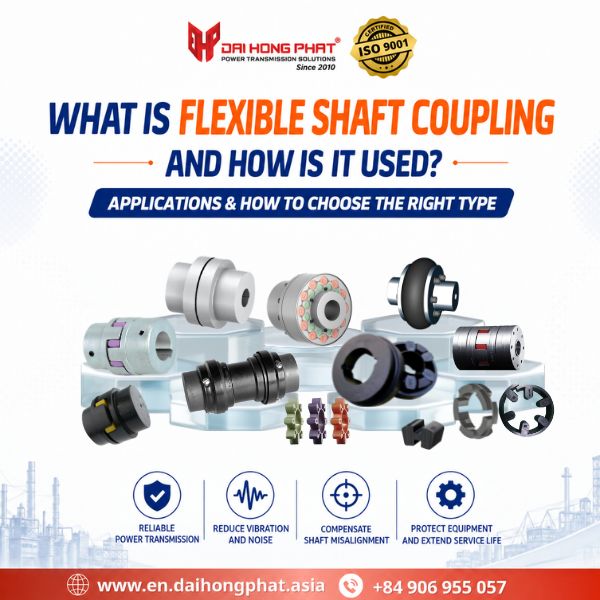
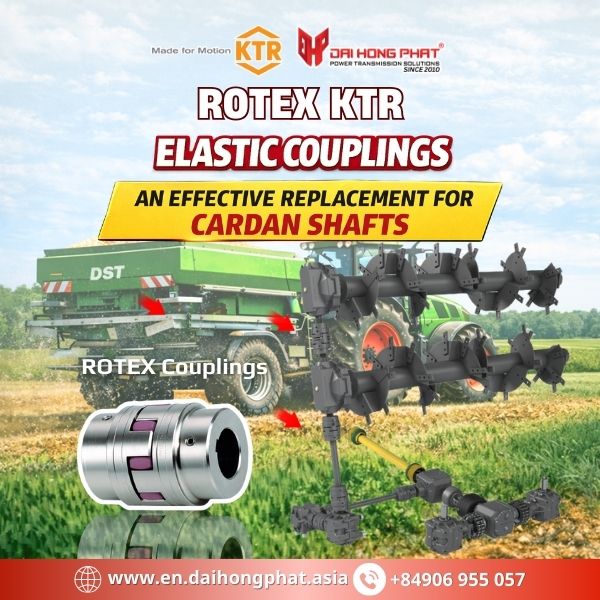
View article: ROTEX KTR Elastic Coupling: Replacing Agricultural Driveshafts
3. Benefits of Unlubricated Drive Systems in Agriculture
– Environmental and Operational Safety Factors
+ Besides technical issues, lubricant leaks directly impact the environment, such as seeping into cultivated soil and affecting the quality of agricultural products.
+ Slippery production areas, increasing waste disposal costs
> Eliminating and reducing lubrication points limits the risk of pollution, creates a safer work environment, and complies with stringent industry standards.
– Reduced Maintenance Costs & Downtime: Maintenance costs include: oil and grease, labor costs, downtime, and delivery schedules.
> When using manual Unlubricated Drive Systems: the number of maintenance items is reduced, and the risk of sudden breakdowns is decreased.
Many businesses only truly see this benefit after having to replace many more expensive parts, while the root cause lies in the original drive system.
4. Unlubricated Drive Systems for Cement, Steel, Conveyor Systems, and Agriculture
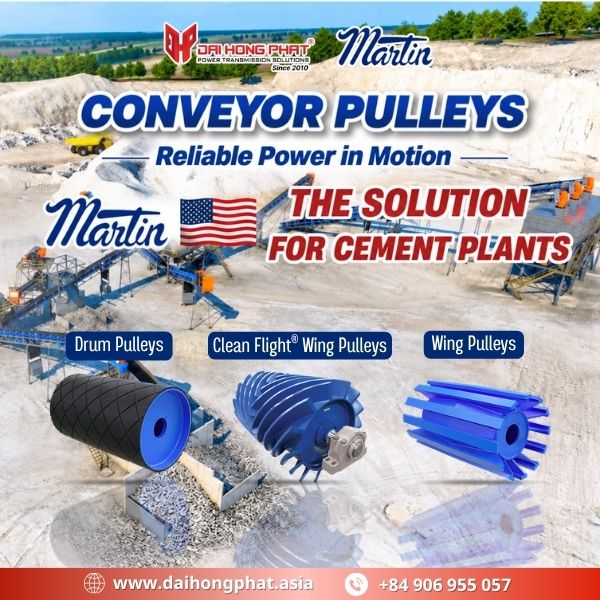
– Cement plants: clinker conveyors, dust collectors, grinding mills
– Steel plants: billet conveyors, rollers, high-capacity fans
– Industrial conveyor systems
– Agriculture: fertilizer spreaders, balers, harvesters
> These industries and fields operate in dusty environments and handle heavy loads. Using Unlubricated Drive Systems reduces downtime and maintenance costs.
5. Dai Hong Phat Corp’s Role in Optimizing Low-Maintenance Drive Systems
In consulting and providing solutions to leading factories and farms in Vietnam, Dai Hong Phat not only supplies products but also focuses on the entire drive system. With experience in “Consulting – Installation – Adjustment“ for industries such as cement, steel, minerals, and seaports, Dai Hong Phat helps customers operate machinery stably, reduce downtime, and optimize the total cost of ownership of the drive system!
Choosing the right solution from the start will determine the durability and operational capability of the entire system.
Contact Dai Hong Phat Corp today for advice on Unlubricated Drive Systems for the agricultural industry.
—————-/—————–/—————–/—————–/—————–
– Hotline: +84906.955.057 | – Email: info@dhp-corp.com.vn
– Website: https://en.daihongphat.asia/ – https://khopnoitruc.com/ – https://ringfeder.com.vn/
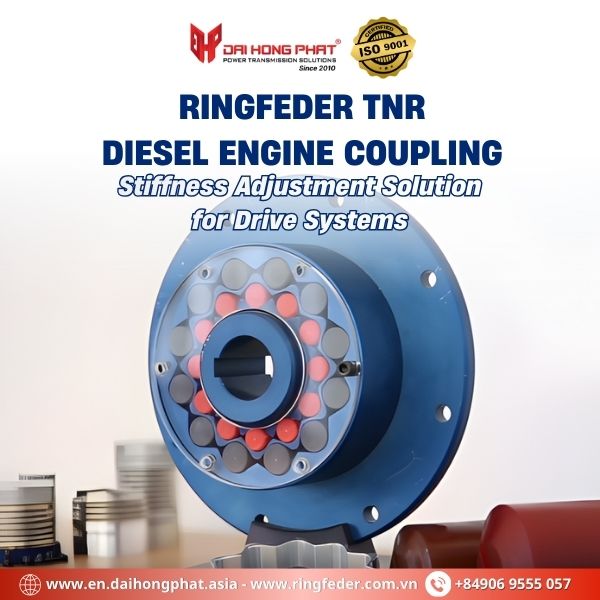
- RINGFEDER TNR DIESEL ENGINE COUPLING – Efficient Stiffness Adjustment
- KTR CLAMPEX CLAMPING SETS: Optimizing roller chain drive systems
- What is Elastic Shaft Couplings? Applications of Elastic Shaft Couplings
- Applications of RINGFEDER® Friction Springs in Hot-Rolling Steel Mills (Coilbox)
- Ringfeder TNR Coupling is Used for Generators and Diesel Engines According to SAE J 620 Standards